EXECUTIVE SUMMARY
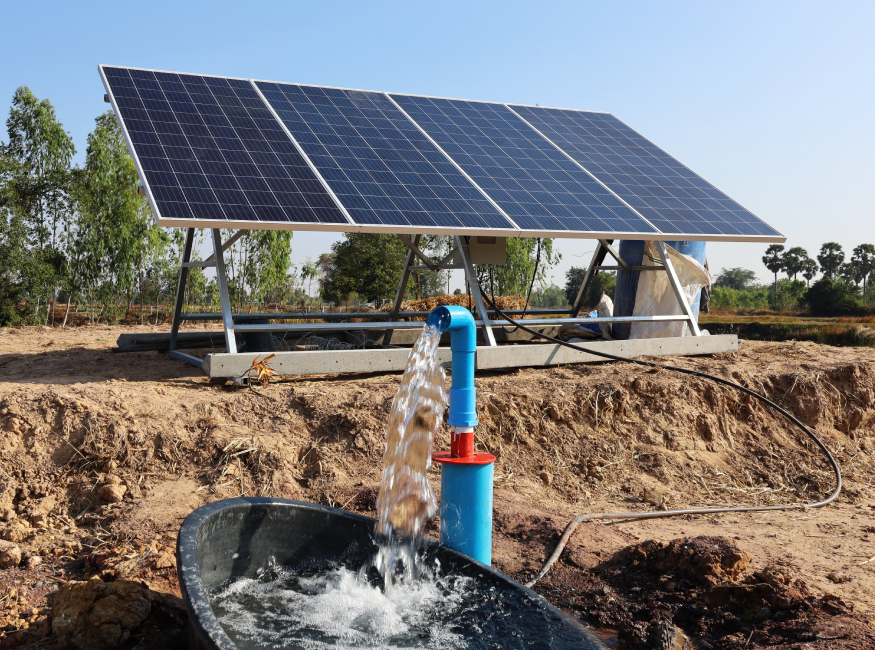
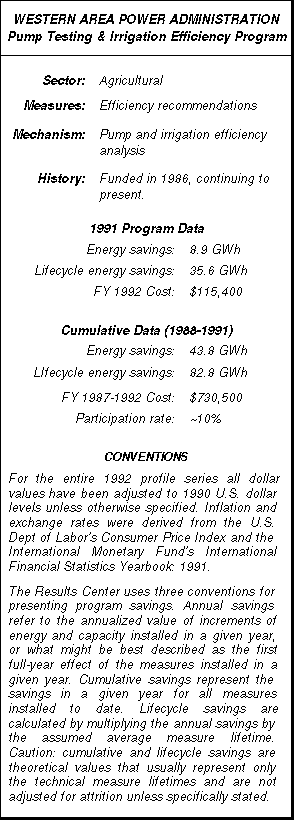 The Western Area Power Administration (Western) Pump Testing and Irrigation Efficiency program promotes state-of-the-art methods for improving irrigation pump efficiency by providing pump tests and recommending efficiency improvements. The educational component of the program is perhaps its strongest, as WAPA provides irrigation efficiency analyses and recommends appropriate techniques for reducing the amount of water that must be pumped, and thus the demands upon the irrigation pumps, while still providing crops with sufficient water.
In 1986, funding for a formal pump testing and irrigation efficiency program run by the Colorado State Soil Conservation Board (CSSCB) was provided by WAPA and the Colorado Office of Energy Conservation. The Energy Conservation for Colorado Agriculture (ECCA) office was opened in 1987 to facilitate the interaction of diverse groups funding and participating in the program and to operate the program, with Mr. Carrol Hamon serving as its coordinator. The objective of the office was to promote agricultural energy conservation through an irrigation efficiency program, pump testing, field demonstrations, workshops, seminars, newsletters, and articles.
The program is actually implemented by three pump-testing teams who travel to farms to perform the irrigation pump tests. Pump tests determine well water levels during pumping, pumping rates, discharge pressure, pump and engine speed, and energy use. Any abnormal well conditions are also noted. The results of the pump test inform the farmer whether the pump needs to be adjusted, rebuilt, or replaced. If a pivot sprinkler system is in use, a pivot evaluation, including both a visual evaluation and an evaluation using a series of calibrated bottles spaced equidistant to the pivot, is performed after the pump test. Then the pump test team recommends whether the farmer should consider changing to medium or low pressure irrigation systems. Farmers are introduced to irrigation scheduling techniques and the team often installs gypsum blocks in the field and shows the farmers how to get weekly readings for soil moisture.
In addition to energy savings, the program’s total water savings to date are 56,344 acre feet. A total of 1,749 wells have been tested during the course of the pump testing program, over 300 farms have used gypsum blocks to help with irrigation scheduling as a result of the program, and approximately 250 Low Energy Precision Application systems have been installed.
One of the most interesting lessons learned is that a program involving many diverse groups can indeed be successful. Federal, state, and local government agencies as well as utilities, commercial irrigation companies, farmers, and a university have all been involved. Furthermore, the program includes technologies which range from measurements of the actual need for water, to its most efficient delivery. Finally, this program has shown that farmers are willing to invest money in energy-efficient technologies once they are convinced of the potential for significant savings.
[CLICK HERE TO DOWNLOAD THE ENTIRE 19 PAGE PROFILE IN PDF FILE FORMAT]
This profile was produced by