EXECUTIVE SUMMARY
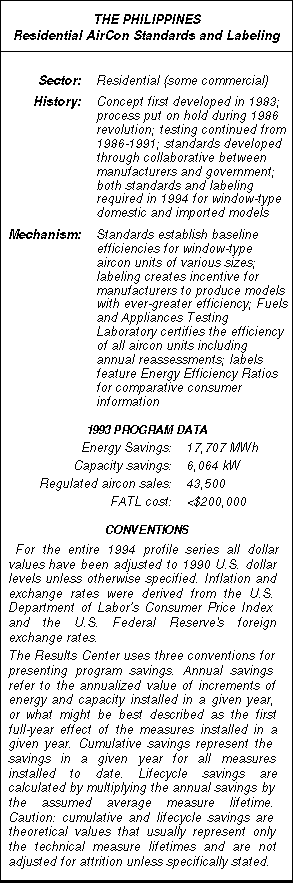 The Philippines Residential Air Conditioner ("AirCon") Standards and Labeling program represents an important avenue for energy efficiency in developing countries while providing insights well worthy of examination by utilities and energy ministries throughout the world. In the developing world, as national economies gain strength and residents seek higher standards of living, addressing the energy use of air conditioning will be essential to keep energy consumption in check. For more developed countries, given the transition to more competitive power industries, standards and labeling may become more important since many utilities are reducing their efficiency program expenditures. By creating standards, efficiency can be increased through advanced technologies; through labeling, incentives can be created that will cause manufacturers to continue to accelerate their efforts, both factors creating means to transform markets for efficient appliances.
The Philippines, not unlike many other developing countries located in hot and humid climates, has been experiencing a dramatic growth in the number and use of air conditioners. While the number of households with "aircon" units is now low, as the economy grows, more and more consumers will be able to afford air conditioning, underscoring the importance of aircon efficiency. This is also exacerbated by the dearth of insulation and advanced window glazings, thus greater aircon capacity is required to achieve desired comfort levels. Furthermore, the program serves as a platform for subsequent initiatives for other end-uses such as refrigerators, motors, and fans to minimize power plant construction and imported fuels, two situations which strain the country’s financial resources and economic development.
For other countries in Southeast Asia, the Philippines AirCon model is encouraging and appropriate. Faced with rates of electric load growth of 5-10% annually and similar demands for greater comfort, standards and labeling initiatives can serve as relatively low-cost, government-sponsored programs. By working in cooperation with manufacturers both domestically and abroad, governments in Southeast Asia can seek to accomplish both increased living standards and the most efficient use of energy, two key factors in their overall development.
For countries around the world, standards and labeling may well become increasingly important. Utilities that need to keep their rates as low as possible to maintain market share are reluctant to provide efficiency incentives. Thus government-initiated programs may become that much more important, creating means of leveraging change and providing appropriate signals to manufacturers and consumers that foster efficiency in the short term and sustain it over time, a model for efficiency that may well be broadly applicable.
[CLICK HERE TO DOWNLOAD THE ENTIRE 24 PAGE PROFILE IN PDF FILE FORMAT]
This profile was produced by