

EXECUTIVE SUMMARY
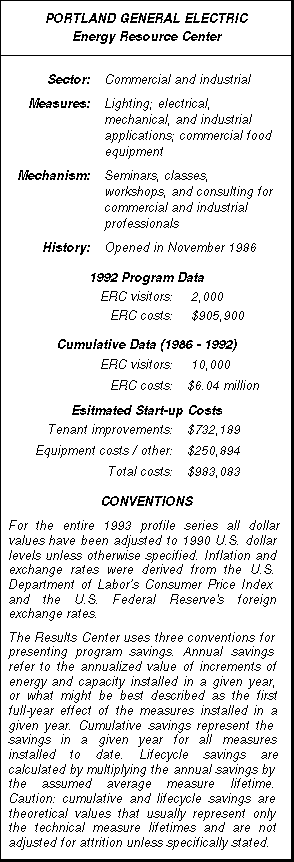 Portland General Electric (PGE) opened the Energy Resource Center (ERC) in November 1986 with the goal of "turning technology into competitive advantage" for its customers. Approximately 10,000 people have passed through the ERC doors since its opening. The ERC has blossomed into more of a regional center, helping interested commercial & industrial professionals from all over the Northwest. The increased "regionalization" of the ERC is a trend that PGE hopes to aggressively pursue. PGE believes that the ERC has helped the utility become much more directly involved with technology transfer and influencing energy choices. More specifically the ERC has helped PGE better reach its commercial and industrial customers.
The ERC is staffed by the Energy Resource Group (ERG), a collection of five full-time specialists in the fields of: lighting; electrical, mechanical and industrial applications; commercial food facilities; and a wide range of energy information. The capabilities of the ERG include seminars, workshops, classes, market development planning, and on-site technical support and training.
The ERC facility contains a lighting lab, demonstration kitchen, an exhibit area, a technical library, an auditorium, and an electric vehicle center.
In terms of promoting more or less electricity use, the ERC focuses on the needs of each individual customer. If energy efficiency is the top priority for a particular client, then the ERG presents that customer with energy efficiency options. If another customer is best served by a certain electrotechnology, (which might actually increase electricity use) the ERG will recommend that technology. In general, PGE seeks to achieve a balance between energy efficiency and beneficial usage of electricity.
The ERC has an annual operating budget of approximately $1,000,000 (nominal dollars), and PGE spent an estimated $983,083 on initial remodeling costs before opening the facility. In 1991 the ERC began charging for classes and seminars in order to help offset costs and meet the budget.
A major emphasis is placed on offering classes and seminars that are of interest and importance to commercial and industrial professionals. As a result the ERC is constantly examining which classes are popular, which are not, what areas the ERC might not be covering, and which classes or topics the ERC should drop.
[CLICK HERE TO DOWNLOAD THE ENTIRE 19 PAGE PROFILE IN PDF FILE FORMAT]
This profile was produced by