EXECUTIVE SUMMARY
 Pacific Gas & Electric's Customized Electric Rebate Program is a "free-form" program where commercial, industrial, and agricultural customers can receive financial assistance for implementing electrical efficiency measures, subject to PG&E's approval. The program is designed to accommodate more complex projects than those covered by the menu-driven Direct Rebate Program. Projects range from commercial lighting retrofits, to industrial process changes, to agricultural irrigation efficiency measures. Customers learn of the Customized Rebate Program through personal contact with their PG&E customer representative; little direct marketing is conducted.
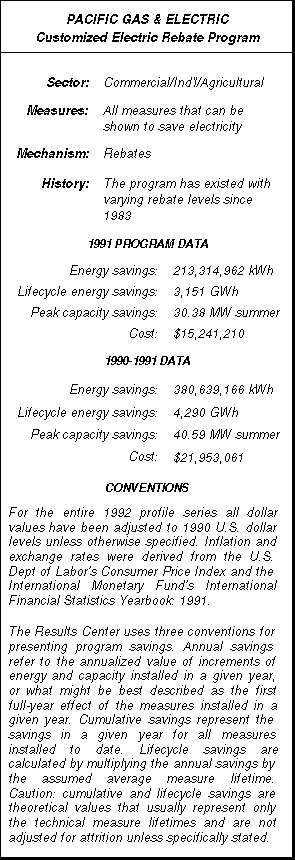
The program provides rebates based upon the quantity of energy that an efficiency measure saves in the first year of its operation. Rebates have varied between 2 and 7/kWh, since the program's inception in 1983, and are currently 6/kWh or 40% of the project cost, whichever is less. The maximum rebate per account is $300,000. (Gas efficiency measures are covered by the Customized Gas Rebate Program for which other rebate levels apply.)
As a result of the California Collaborative Process, PG&E has been allowed to earn a return on its DSM expenditures. Therefore, it has placed greater emphasis on carefully documenting its DSM programs' savings and costs. For the Customized Electric Rebate Program, PG&E is conducting billing analyses, metering of customers' facilities and operations, and on-site validation of measures installed. Due to these efforts, data reported after 1989 are much more easily analyzed and compared than data produced in previous years. Our analysis will therefore only examine data from 1990 and 1991.
During 1990 and 1991, the program realized 380 GWh of cumulative energy savings and 40.6 MW of cumulative capacity savings. The cost of this saved energy was 0.72/kWh at a 5% real discount rate. PG&E's program expenditure was $22 million, of which $19 million were rebates. The average cost per participant was $5,893.
One of the benefits of the Customized Electric Rebate Program is that it provides the utility with information on which types of energy saving projects and technologies are popular with its customers. If PG&E wishes to encourage such projects and technologies, it can determine standard rebates and procedures for them and incorporate them into the Direct Rebate program.
[CLICK HERE TO DOWNLOAD THE ENTIRE 18 PAGE PROFILE IN PDF FILE FORMAT]
This profile was produced by