
EXECUTIVE SUMMARY
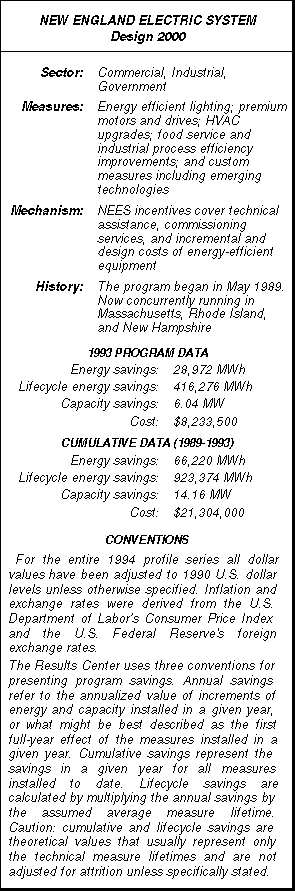 New England Electric System’s Design 2000 program is focused on increasing the efficiency of projects "where new electrical equipment is being installed as a matter of normal business activity," specifically new construction, renovation, and replacement of failed equipment. These planned energy savings opportunities are what NEES calls "time dependent" opportunities, the focus of the Design 2000 program. Other pre-planned retrofits for the commercial and industrial sector are incented under the Energy Initiative program, NEES’s largest program in terms of costs and savings. Together these programs provided more than half of all NEES’s total DSM energy savings in 1993 and just under half of the capacity savings impacts.
Utilities implementing new construction DSM programs face the fundamental challenge of intervening in the design process at the right time. Suggesting energy efficiency enhancements too late is ineffectual. On the other hand, tracking new construction projects and interfacing with a new building’s permitting, financing, and design is extremely challenging and requires an intimate understanding of the design process. To fulfill program objectives, NEES staff have had to market the program to raise customer awareness of its incentives and technical assistance services, to use all possible information sources to track new construction projects, to assign additional dedicated program specialists to regional offices, and to extensively use outside expertise to provide heightened customer technical services through the program.
Design 2000 provides three customer approaches depending on the size and complexity of the projects, and in accord with the time schedule of the construction project at hand. A Prescriptive Measure Approach is generally used for small, relatively standard projects and provides specific rebates for certain technological upgrades including some interesting, yet generic, process improvements. A Custom Measures Approach is used for more complex projects requiring modelling and design assistance.
The Comprehensive Design Approach is used for large projects to reap maximum savings using an integrated approach whereby at least four major end-uses of electricity must be addressed. Design 2000 pays not only 100% of the marginal costs of efficiency upgrades but also pays for building simulation and technical assistance, including an honorarium to the design team to cover their costs in analyzing the state of the art options for efficiency. By doing so, Design 2000 pays essentially all out of pocket expenses associated with the efficiency upgrades and then provides the participant with lower electricity bills, which is an attractive program selling point and feature especially in soft real estate markets. Depending on the size and complexity of the project, commissioning is also provided to ensure that the original design intent is met.
[CLICK HERE TO DOWNLOAD THE ENTIRE 22 PAGE PROFILE IN PDF FILE FORMAT]
This profile was produced by