
EXECUTIVE SUMMARY
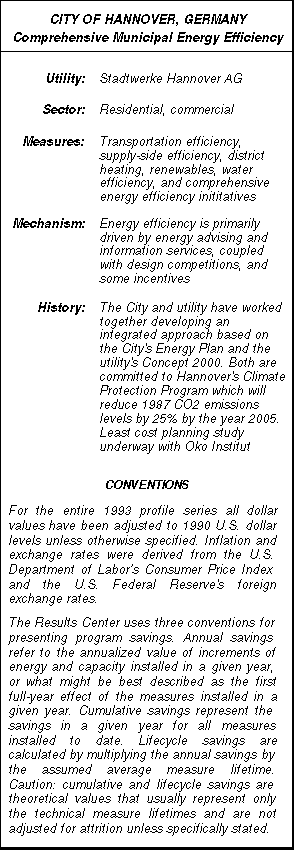 Hannover is a capital for energy efficiency in Europe and has worked on a comprehensive approach to energy management that includes supply-side efficiency, district heating, transportation efficiency, water efficiency, promotion of renewable energy, and more conventional energy efficiency. Its efficiency initiatives are a subset of the City’s far broader drive toward sustainability and environmental stewardship and have been spurred on by concerns about foreign oil dependence and the Chernobyl nuclear accident, concerns that translated into the City’s progressive Energy Plan and Climate Protection Program.
Hannover has one of the most vibrant multi-modal transportation systems in Europe. A proliferation of bicycles nicely complement light and high speed rail systems, all in place to reduce dependence on automobiles and imported petroleum. Hannover’s biggest employer is Volkswagen, yet the downtown core has been closed off to cars and two-lane roads coming into the City narrow down to single lanes, purposefully creating traffic jams and incentives for commuters to leave their cars at home.
Stadtwerke Hannover’s new combined heat and power plant provides an insight into the City’s commitment to wise and responsible energy use. While the typical U.S. power plant is 30-35% efficient and produces only electricity, Hannover’s new plant has five basic outputs and one saleable by-product, making its overall efficiency approach 90%. The plant generates electricity and provides district heating for downtown Hannover. The plant also sells hot water to the Volkswagen van factory across the street, and high and low pressure steam to a tire factory adjacent to the plant. Particulates collected, including sulfur from flue gas desulfurization units, have been used for cement for the chunnel.
Stadtwerke Hannover AG has also implemented numerous DSM programs with a focus on advisory services and space heating. Programs include free furnace efficiency analysis; development of heating system databases; energy efficiency contests for architects; customer efficiency contests with cash awards; demonstration programs; loans of end-use measuring equipment; a downtown energy-efficiency information center; all in conjunction with pilot renewable energy programs.
Hannover’s least-cost planning study is a pioneering effort to use the North American planning concept to institutionalize energy efficiency investments in the utility’s broader business and investment strategies. The study includes six pilot DSM programs and is especially important in Hannover where an increasingly competitive power market threatens to undermine investments in energy efficiency and long term strategies for sustainability.
[CLICK HERE TO DOWNLOAD THE ENTIRE 20 PAGE PROFILE IN PDF FILE FORMAT]
This profile was produced by