
EXECUTIVE SUMMARY
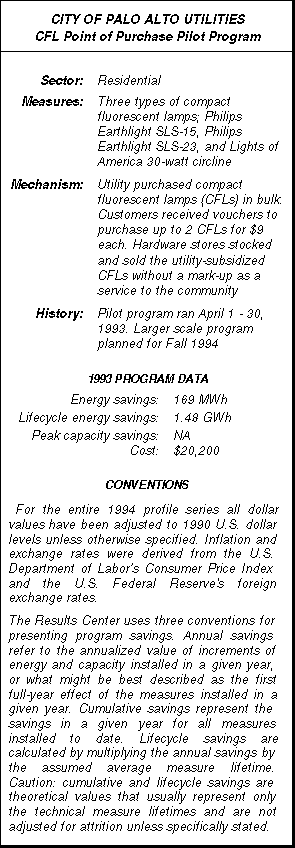 The City of Palo Alto operates a combined municipal utility that serves electricity, gas, and water. Several factors make this relatively small utility an interesting case study for energy efficiency: First, Palo Alto is a highly-educated community. Second, the City has among the lowest electricity rates in California. Third, since its service territory is adjacent to Pacific Gas & Electric, one of the nation’s leading DSM utilities, residents of Palo Alto have come to expect progressive energy efficiency programs.
Since 1976 Palo Alto has had a colorful history of energy efficiency innovation. Currently the City offers a range of programs including financing for solar hot water heaters, supplements for school curricula, and bill analysis. While California’s prolonged drought caused the utility to focus on water efficiency nearly exclusively from 1990-1992, in 1993 Palo Alto introduced a number of new programs including an innovative pilot program to promote compact fluorescent lamps, the focus of this profile.
Many larger utilities are exploring their opportunity to provide incentives directly to manufacturers rather than customers. By doing so, manufacturers will not only promote lower-cost, energy-efficient products, but downstream markups will be minimized. Palo Alto wanted to develop a manufacturer rebate program for compact fluorescent lamps (CFLs), but was unable to do so because of its relatively small size. Therefore staff elected to experiment with a vendor-based approach for a one-month long pilot program.
The ensuing program was quite simple: The City bought CFLs in bulk and provided them to local hardware stores for resale. Then vouchers were sent to residential customers. While the City bought CFLs for approximately $12 each, customers with vouchers could purchase up to 2 lamps for $9 apiece, resulting in a small utility subsidy for each lamp put in service. Interestingly, the vendors, the City’s four hardware stores, did not directly profit from the sales of the lamps, but were pleased with increased foot traffic and ancillary sales of lamps and other goods.
Palo Alto’s experiment achieved higher participation than expected and also higher penetration than expected. Not only were all the lamps that were initially purchased sold, but the utility had to purchase more lamps to fulfill demand. Customers also bought additional compact fluorescent lamps at their full list price, proving to the hardware store owners that consumer demand for CFLs warrants stocking the lamps and giving them adequate display space. Furthermore, a survey of program participants revealed that participants were satisfied with the lamps’ life, light quality, and brightness, and fully 85% of survey respondents claimed they will purchase the lamps again at a discounted price.
[CLICK HERE TO DOWNLOAD THE ENTIRE 16 PAGE PROFILE IN PDF FILE FORMAT]
This profile was produced by