EXECUTIVE SUMMARY
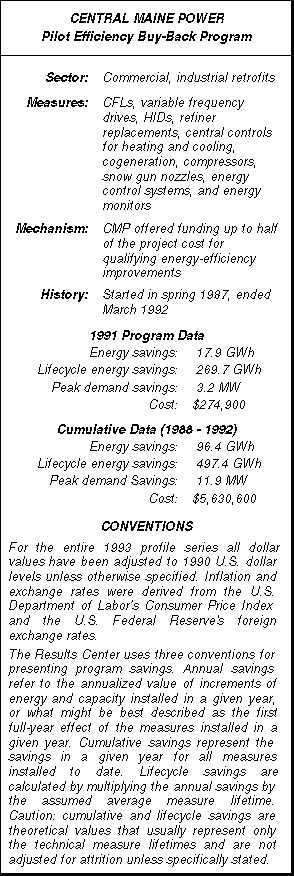 Central Maine Power’s Pilot Efficiency Buy-Back program (EBB) was implemented in the spring of 1987. CMP hoped to quickly achieve large energy savings by targeting its major commercial and industrial customers. Interested customers submitted proposals for improving the electric efficiency of their facilities. There were no requirements as to the types of measures installed. Savings requirements were very high. Proposed projects had to save a minimum of 500,000 kWh per year and shift (or reduce) winter on-peak demand by 500 kW. Qualifying projects received funding from CMP which could reach a maximum of half the project cost.
A total of ten projects qualified for the program. To date, eight projects have been completed, one participant went out of business, and one project is still underway. Three projects were completed in 1989, two projects were completed in 1990, and three projects were completed in 1991. The program formally ended in March 1992. The EBB program was terminated because CMP believed that the services offered by the program could be provided through a combination of the Power Partners program and a revised Retrofit Rebate program.
Participants with completed projects are Bates College; Data General computer components company; Boise Cascade pulp and paper company; Statler Tissue Company; Sugarloaf ski area; Champion Paper; and Sunday River ski area. The ongoing project is a Veterans Administration Hospital.
Measures installed through the program included compact fluorescent lamps, variable frequency drives, high intensity discharge lamps, refiner replacements, central controls for heating and cooling, cogeneration, compressors, ground wood storage tanks, snow gun nozzles, energy control systems, and energy monitors.
Annual energy savings for the program total 33,162 MWh, and winter peak demand savings for the program total 4,849 kW. Energy savings per participant average 4,145 MWh.
CMP program costs total $5,630,600 for 1988 through 1992. Customer incentives made up 90% of the total program cost. The utility paid an average of $703,825 per participant and program participants paid an average of $614,441 each. The Results Center calculated an average cost of saved energy for the program from 1988 through 1992 at a 5% discount rate of 1.64¢/kWh.
[CLICK HERE TO DOWNLOAD THE ENTIRE 21 PAGE PROFILE IN PDF FILE FORMAT]
This profile was produced by